

Color Correction
How It Makes Us Different
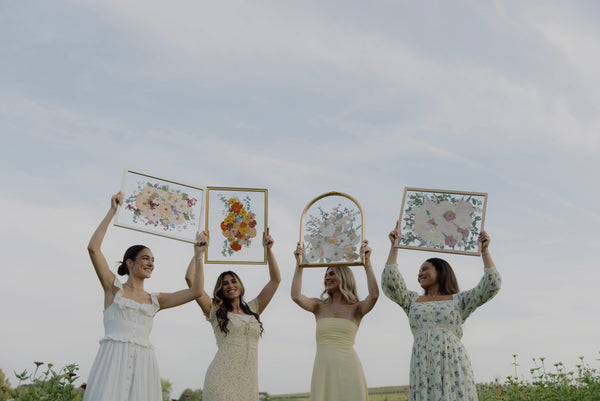
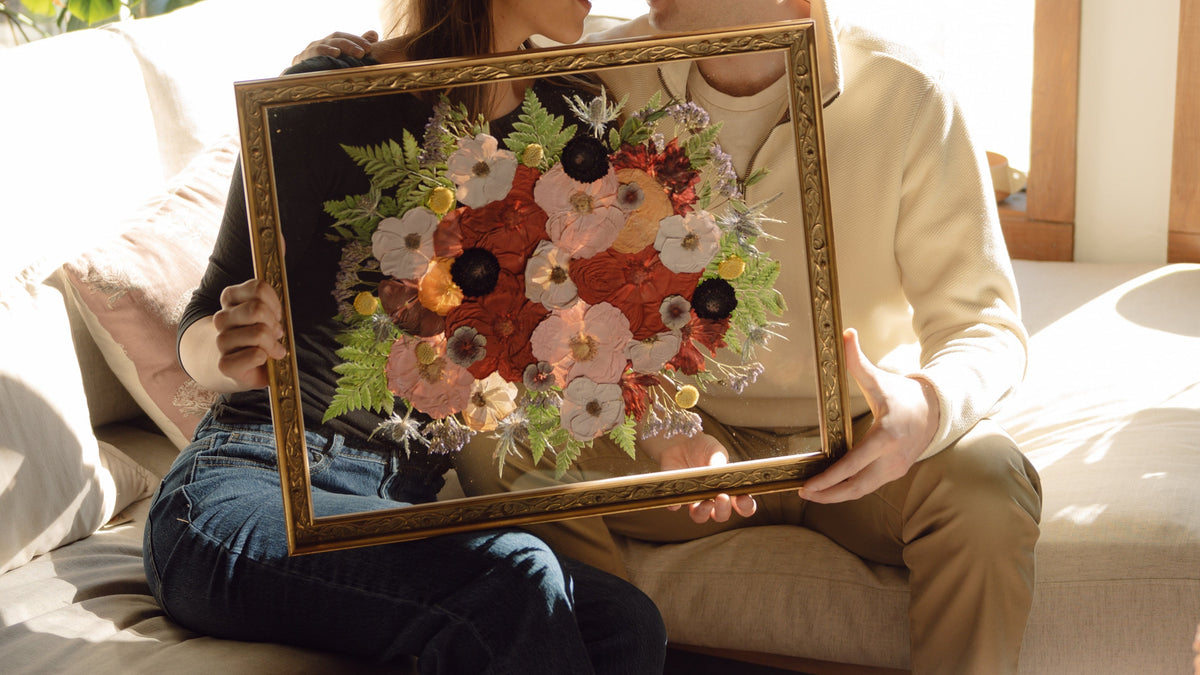
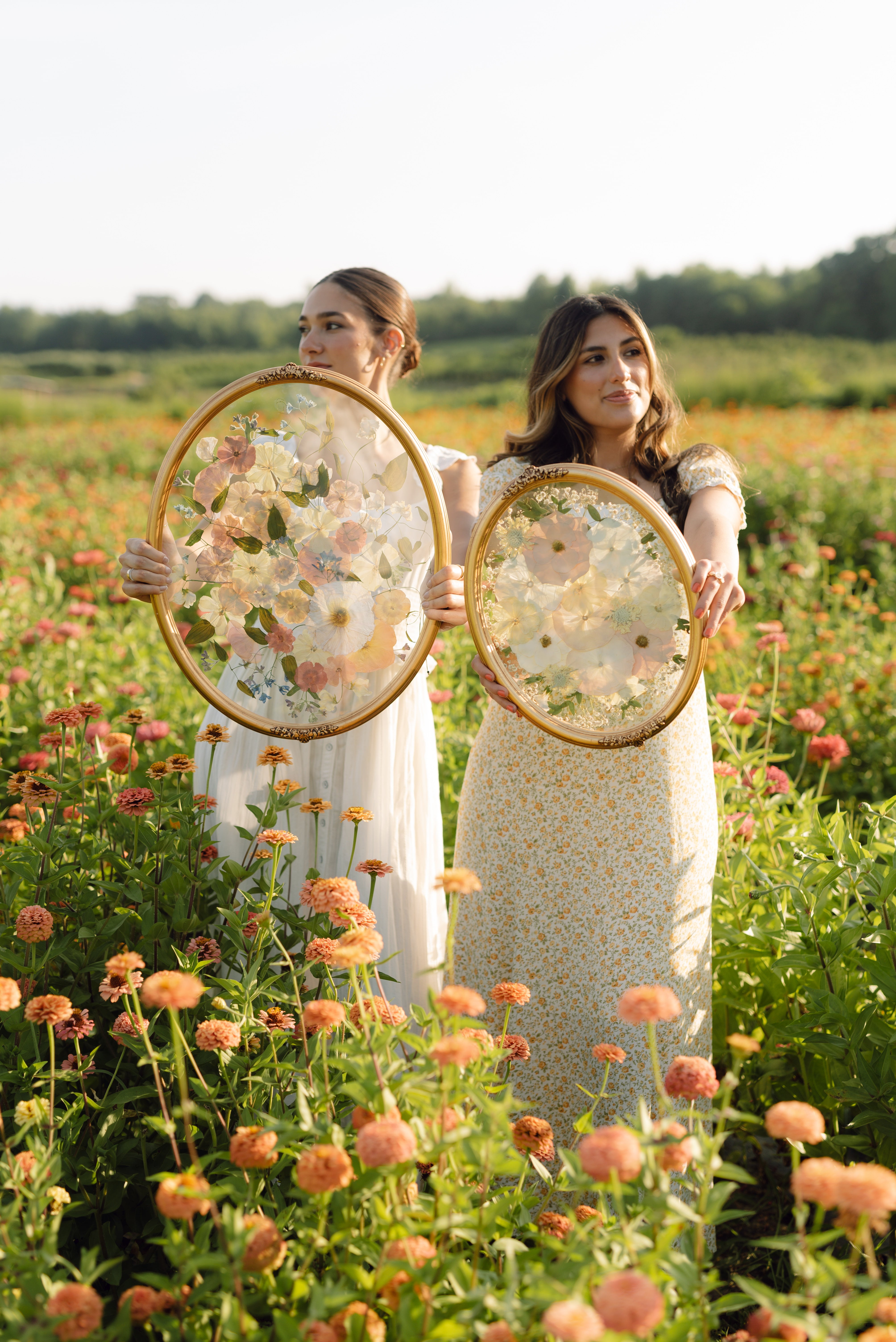
At Hudson Stems, we believe you should have the option of enhancing your wedding flowers so they look just as stunning as the day you held them. After pressing, some blooms naturally fade or shift in color—whites can turn ivory, reds can deepen, and certain flowers may lose their vibrancy altogether. That's where color correction comes in.
That said, there's something quietly beautiful about letting nature take its course. The gentle fading and softening of color over time is a poetic passage of time—a living reminder that your flowers were once real, held on one of the most meaningful days of your life. Some clients choose to embrace these changes as part of the story their bouquet tells.
During checkout, you'll have the option to opt in or out of color correction. Not sure which is right for you? This page is designed to help you make an informed decision so you can choose the option that best reflects your vision.
Color Correction Example
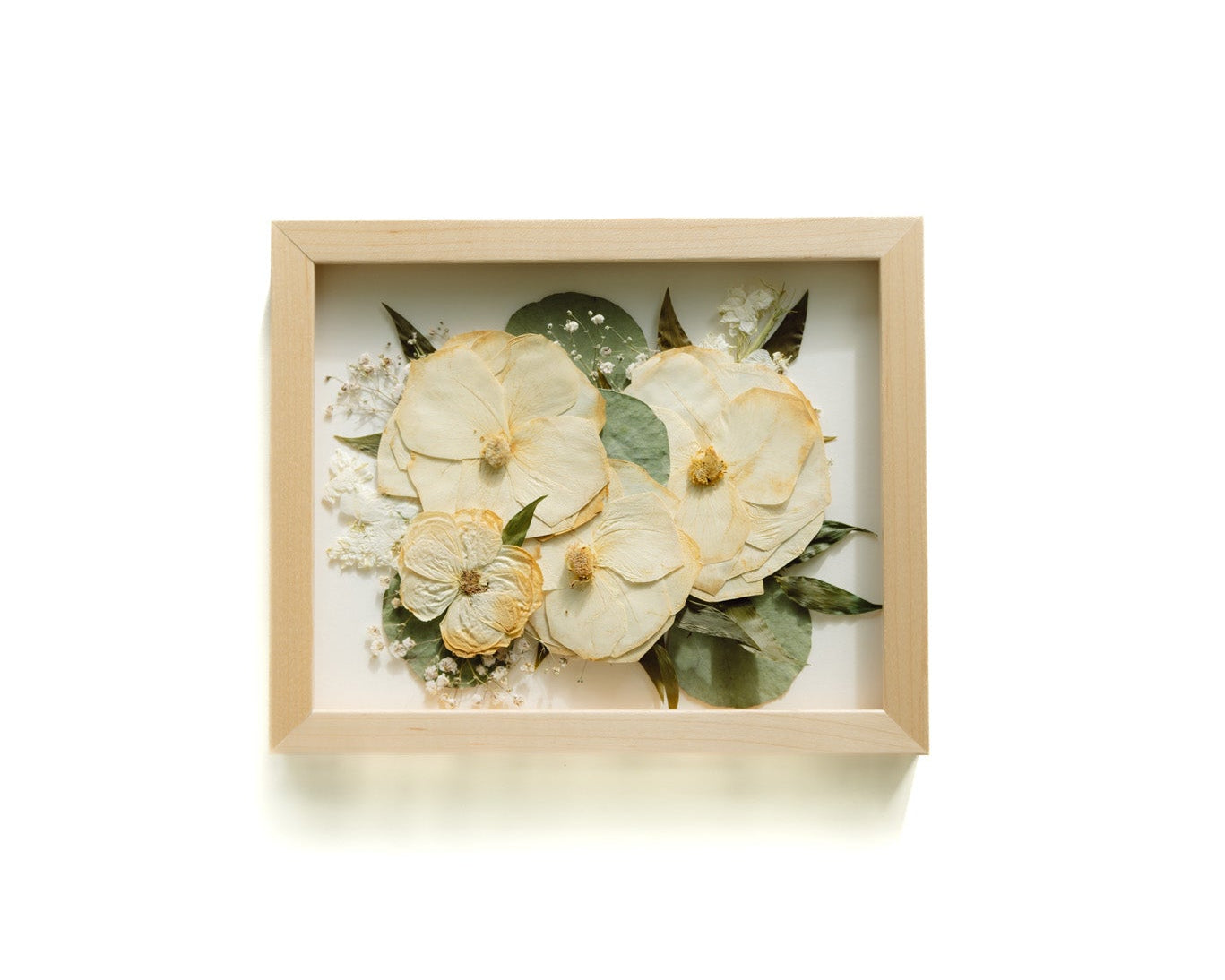
Before

After
What exactly is color correction, and why should I consider it?
Color correction is a process where we enhance the natural colors of your flowers to restore vibrancy after pressing. Some flowers naturally fade or shift in color during the preservation process, and color correction helps bring back the fresh, vibrant look of your bouquet. We offer it as an option because we want to ensure your flowers look as stunning as the day you held them.
Does opting in for color correction mean my flowers won't change at all over time?
All pressed flowers will change color over time that's simply the nature of preserved botanicals. Color correction slows that process down, helping blooms like whites, reds, purples, and light pinks hold onto their vibrancy for much longer. It's an enhancement, not a permanent shield over the years, some gradual softening or shift in tone is still to be expected.
Think of color correction as giving your flowers their best and longest chapter not an unchanging one.

UPON COMING OUT OF THE PRESS
This was an all-white bouquet! You may notice that some of the blooms, such as roses, have developed slight ivory or beige tones. Slight browning is also more visible. This gentle change is a natural part of the floral preservation process and not a result of any error by your preservation artist. Subtle shifts in color, especially in lighter flowers, are common and help capture the organic beauty of your original arrangement.
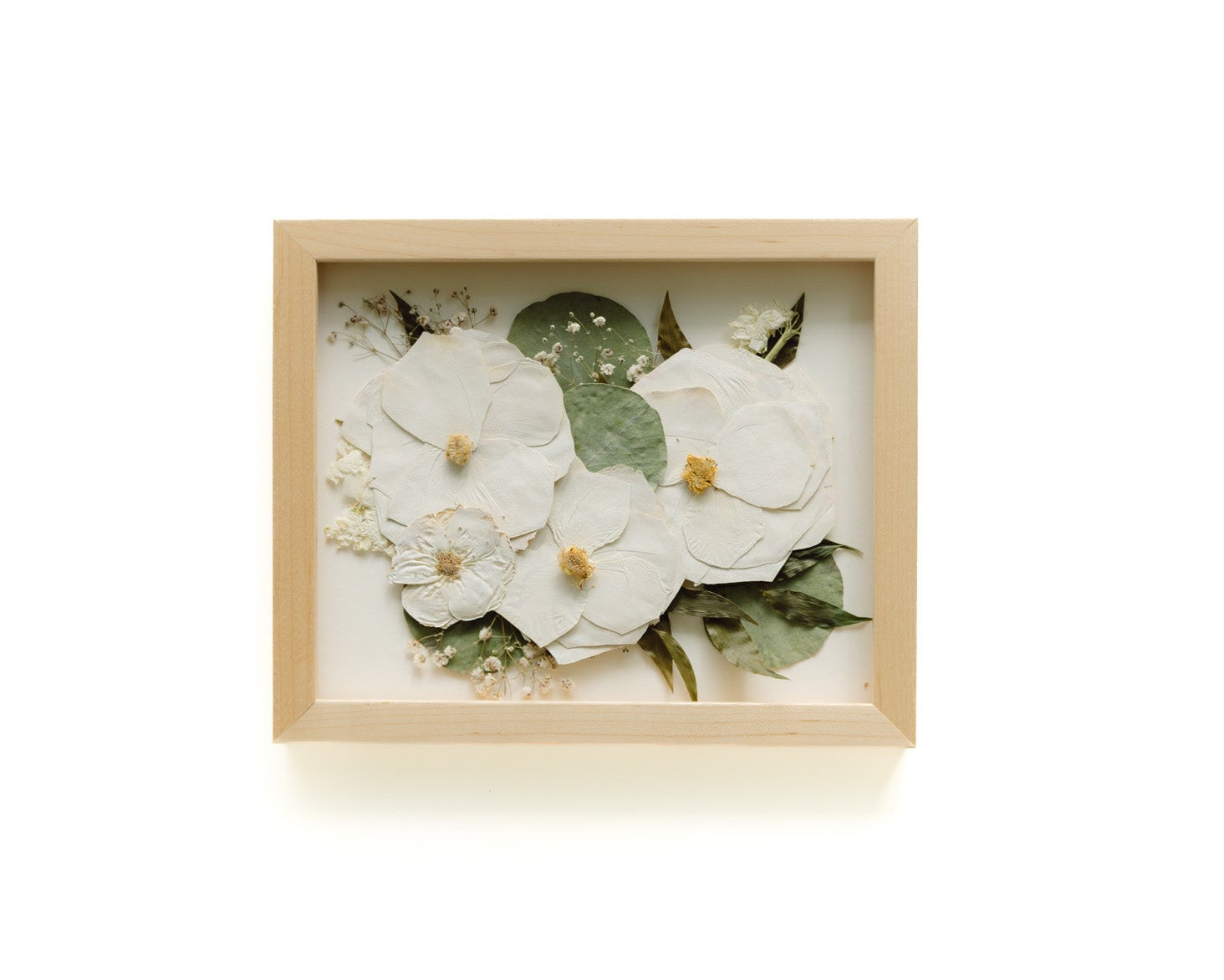
AFTER COLOR CORRECTION
With color correction, the flowers have been beautifully restored to their natural state—brighter, and with any browning carefully concealed to preserve the original elegance of your bouquet.
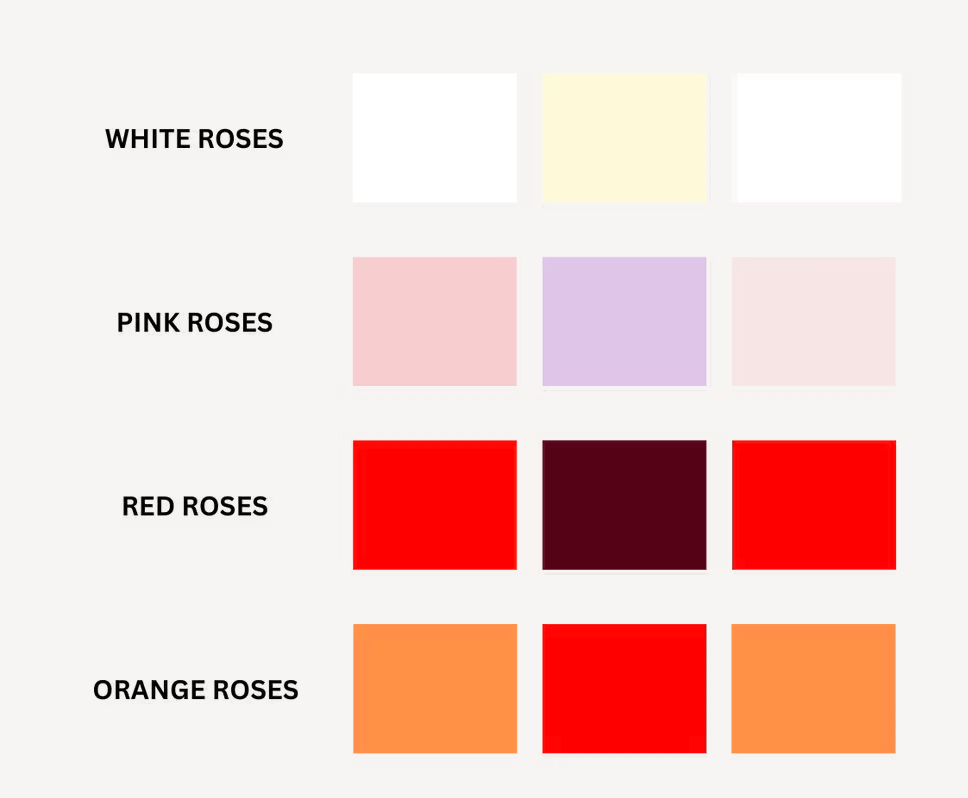
Guide to Color Changes in Preserved Flowers
For simplicity, this infographic focuses on roses, but all flowers experience color changes during preservation. Whites often turn ivory or light yellow, pinks can deepen or fade, reds may darken to burgundy, and purples can shift to blue or brown tones.
While color correction has its limitations, it significantly helps restore vibrancy and ensures your bouquet retains a color palette much closer to how you remember your wedding flowers.
THE EVOLUTION OF COLOR CORRECTED PRESSED FLOWERS & WHAT TO EXPECT OVER TIME:
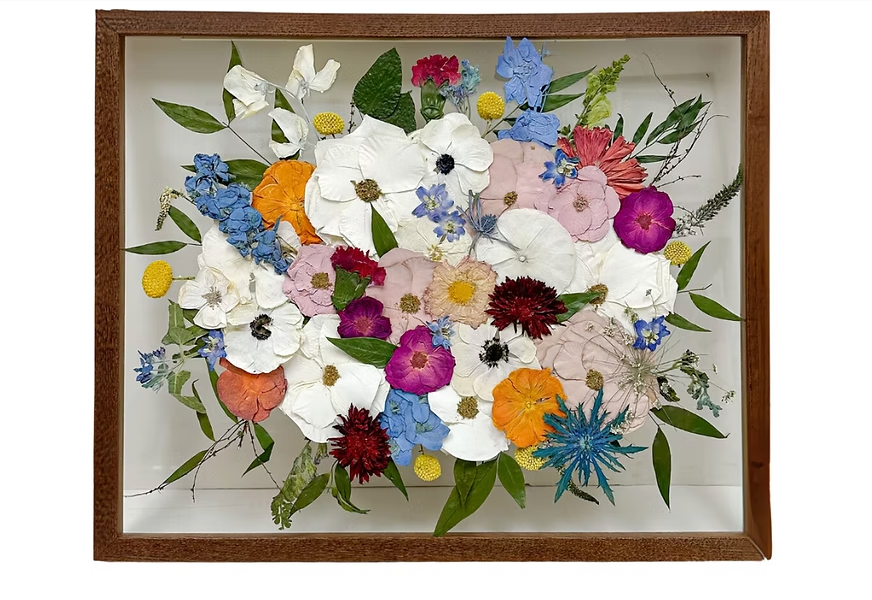
ON THE DAY IT WAS UNBOXED
Vibrant, colorful!
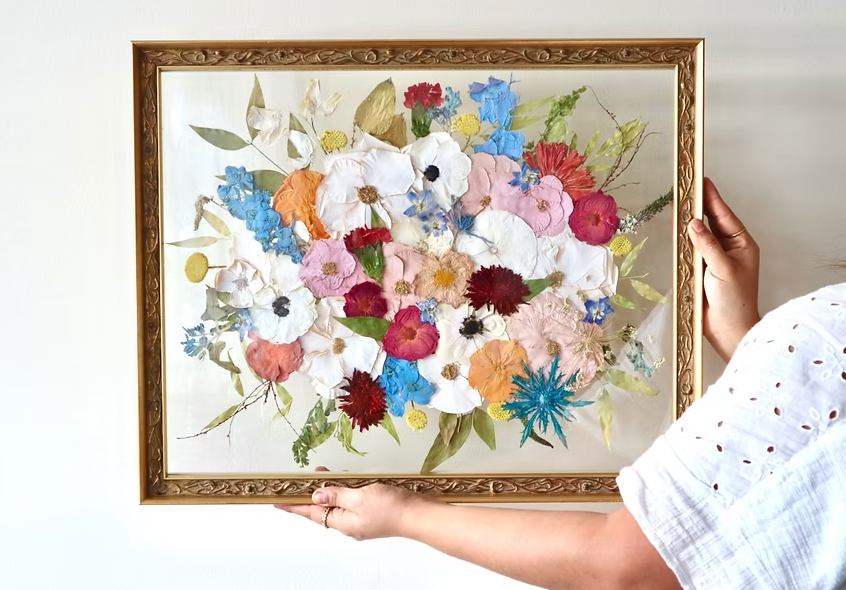
TWO YEARS LATER
This frame has been on our studio gallery wall for two years in partial sunlight—and it still looks stunning. Thanks to color correction, the blooms remain vibrant. Fading in the flowers has occurred even with color correction but it is not as drastic of a change.
Color Correction FAQ
At Hudson Stems, color correction is included at no additional cost. We believe in giving you the best results without hidden fees or surprises.Whether you choose to have color correction or opt out, the price remains the same because both options require the same level of care and attention, just at different stages of the process. So, no matter which option you choose, your flowers will be treated with the same high level of care.
That's a great question! While we try our best to ensure your flowers turn out beautifully, if you decide you’d like color correction after the fact, there may be a small fee.We truly recommend considering your preference for color correction prior to booking, as it helps avoid the additional fee and ensures you're completely happy with the result from the start.
Color correction is absolutely optional. During checkout, you’ll have the chance to decide if you want it or not. Some clients love the enhanced look, while others prefer to embrace the natural color changes that happen during pressing.
If you’re unsure, think about how you want your flowers to look years from now. Some clients love the natural fading, as it represents the passage of time. If you’re okay with that, skipping color correction is great.
However, if you want your bouquet to stay vibrant, color correction can help. While some subtle changes may still occur, they’ll be minimal.
Either way, we’re here to ensure you’re happy with your final piece!
No, Opting in for color correction helps preserve the vibrancy of certain flowers—especially whites, reds, purples, and light pinks—but it doesn't mean your flowers will remain completely unchanged over time.
All pressed flowers experience natural aging, including some fading or softening of color. Color correction enhances their overall appearance and helps slow that process, but some degree of change is inevitable due to the organic nature of the materials.
Think of it as a thoughtful enhancement—while it can extend the visual life of your bouquet, it isn’t a permanent shield against time. Over the months and years, if you flip your frame around, you may notice a difference between the corrected front-facing flowers and the natural fading on the reverse. Since the flowers’ organic base naturally browns over time, some shift in the corrected color is to be expected as well. These gentle changes are part of the natural life cycle of preserved blooms.
All preserved flowers will continue to age naturally over time. While color correction is applied to achieve the desired look, it does not stop the natural changes that occur at the base of the flowers. As time passes, ivorying or subtle tonal shifts at the base are expected—this is a natural process and part of working with real botanicals.